A tennis bracelet is a flexible bracelet made of a single, continuous line of identical stones, each set in its own small link, so the whole thing moves like fabric and sparkles all the way around the wrist. Classic versions use round diamonds in four-prong settings on white or yellow gold; today you'll find tennis bracelets in every metal, every stone shape and every budget.
This guide covers where the name comes from (it really is about tennis), the main styles, how to choose the right length, clasp and stone — with an honest look at diamond vs. moissanite vs. lab-grown vs. cubic zirconia — and how to wear and care for one. Then we'll show you 16 tennis bracelets from our own shop, all cubic zirconia (CZ), and tell you exactly what each one is and isn't.
What is a tennis bracelet, exactly?
Two things make a bracelet a tennis bracelet:
- One line of stones. Usually the same size and cut from end to end. Some versions alternate colors or shapes, but the "line" is the point.
- Individually set links. Each stone sits in its own setting, hinged to the next, so the bracelet drapes instead of standing stiff like a bangle.
Before it had its famous nickname, jewelers typically called this design a "line bracelet" or "diamond line bracelet" — a plain description of what it is.
Why is it called a tennis bracelet?
Because of Chris Evert. As the story is most often told, Evert was playing at the US Open when the clasp on her slim diamond line bracelet broke and the bracelet fell onto the court. She asked for play to stop while it was found. When reporters asked about it afterward, she has recalled telling them, "Oh, that was my tennis bracelet," and the name stuck.
Evert's own retelling places the moment at the 1978 US Open, though many sources say 1987, and the name seems to have really taken hold in print and in jewelry marketing during the mid-to-late 1980s. Either way, the lesson from the original incident is a practical one we'll come back to: the clasp matters.
Tennis bracelet styles
Classic prong-set round
The default: round stones, each held by four small prongs. Prongs let the most light into the stone, so this is the sparkliest style. Thin versions are the everyday choice; bigger stones read red carpet.
Bezel tennis bracelet
A bezel setting wraps each stone in a thin rim of metal instead of prongs. It's smoother (no prongs catching on sweaters), more protective and slightly more modern-looking, at the cost of a little sparkle. Bezel tennis bracelets are a favorite for stacking with watches.
Baguette and emerald cut
Rectangular step-cut stones set end to end. Instead of sparkle you get clean flashes of light, and some designs space the baguettes out like little bars.
Princess, square and marquise
Square (princess) stones give a crisp, continuous line with almost no metal showing. Marquise stones — pointed ovals — are often set at an angle, which makes the bracelet look like a vine of leaves.
Colored tennis bracelets
Sapphire-blue, ruby-red, emerald-green, opal and rainbow tennis bracelets are all popular searches. Many alternate a colored stone with a clear one, which keeps the look classic but adds personality. In affordable jewelry, "sapphire" or "ruby" in a name usually describes the color, not the gem — ours included.
How to choose a tennis bracelet
Size: how should a tennis bracelet fit?
A tennis bracelet should sit close to the wrist but move freely — you should be able to slide a finger underneath, and it shouldn't slip over your hand. The average women's tennis bracelet is 6.5 to 7 inches. To find yours, wrap a soft tape (or a strip of paper) around the wrist bone and measure snugly. Most jewelers suggest adding around half an inch for a close fit and closer to an inch if you like it looser. If you're between sizes, go up.
Buying a gift and unsure of the size? An adjustable slider version is the safest bet.
Clasp: the Chris Evert lesson
- Box clasp with a safety catch. A tongue clicks into a box, and a small hinged latch (often a figure-eight) acts as a backup. This is the traditional, most secure option for fine tennis bracelets.
- Magnetic clasp. Easy to close one-handed, which is great if you wear a bracelet daily. The trade-off: it can pop open if it snags. Fine for lightweight fashion pieces, not for a four-figure diamond one.
- Slider (bolo) clasp. The chain ends run through a sliding bead so you can pull it tighter or looser. Very forgiving on sizing; slightly more casual.
Metal: gold, silver, rose gold
- Gold tennis bracelets (yellow, white or rose) are the classic fine-jewelry option, usually 14k or 18k.
- Sterling silver tennis bracelets are bright and white, often rhodium-plated to slow tarnish.
- Platinum is the top-end choice for white metal.
- Plated brass (what most of our picks are) gives the gold, rose gold or white-metal look at a fraction of the price; the plating is a finish, so it needs a bit more care.
Silver-tone pairs best with a steel watch; gold-tone warms up a stack. Match the jewelry you already wear most.
Diamond vs. moissanite vs. lab-grown vs. CZ tennis bracelets
This is the question behind a lot of searches, so here's the honest version.
Natural diamond. The original. Hardness 10 on the Mohs scale, so it resists scratching better than anything else, and it keeps its polish essentially forever. Also by far the most expensive option; a real diamond tennis bracelet is typically priced in the thousands. Big names from Tiffany & Co. and Cartier to Pandora and Swarovski all sell their own tennis bracelets, across very different materials and price points.
Lab-grown diamond. A real diamond, grown in a lab. The FTC's jewelry guides allow it to be called a diamond only with a clear qualifier like "laboratory-grown" or "laboratory-created," because it has essentially the same optical, physical and chemical properties as a mined diamond. It costs noticeably less than natural diamond for the same look, which is why lab diamond tennis bracelets have exploded in popularity — but it's still fine-jewelry money.
Moissanite. Not a diamond: it's silicon carbide, first found by French chemist Henri Moissan in 1893 in meteorite fragments. Natural moissanite is extremely rare, so gem moissanite is lab-made. It's very hard (about 9.25–9.5 Mohs), very durable, and throws off more rainbow fire than diamond. Priced well below diamond, well above CZ.
Cubic zirconia (CZ). A lab-made crystal, commercially produced since the 1970s. It's about 8 on the Mohs scale, it's heavier than diamond for its size, and it actually shows more colorful fire than diamond. The honest limitations: it's softer, so over years of wear the facet edges can soften and the stones can look a little less crisp, and it needs regular cleaning to keep its shine. The big advantage is price: tens of dollars, not thousands.
Our take: if you want an heirloom, save for a diamond or lab diamond. If you want the look now, want to test whether you'll actually wear a tennis bracelet every day, or want several to stack, CZ is the sensible buy. Every bracelet below is CZ, and we'll never call it anything else.
Our picks: 16 tennis bracelets from our shop
A quick note on materials before we start. Every pick is cubic zirconia. Most are brass with a rhodium (silver-tone) or gold-tone plating; one is sterling silver. We don't currently have a stainless steel tennis bracelet in stock, so if steel's tarnish-proof toughness is your priority, check back. Unless noted, the fixed-length pieces are 7 inches, the most common women's size. Prices were checked in September 2026.
Classic silver-tone tennis bracelets
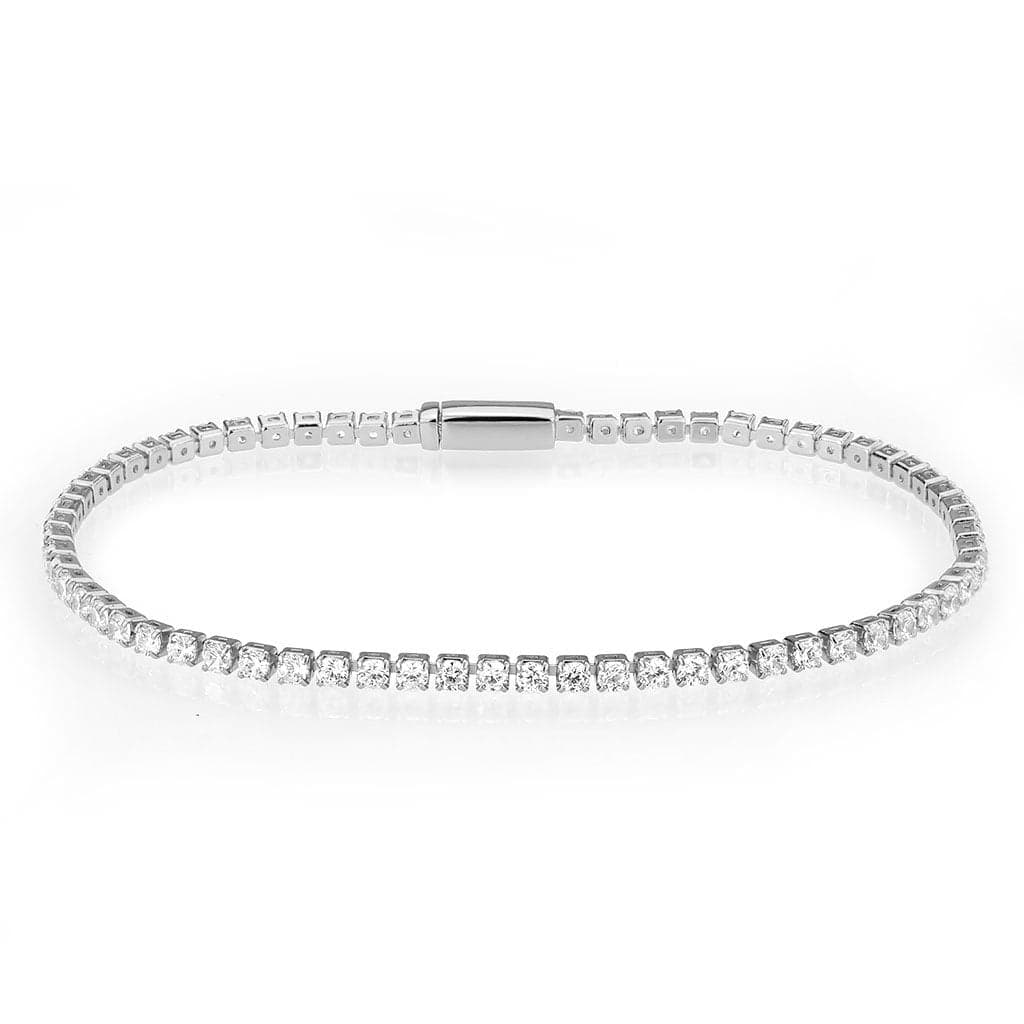
Our pick: Brass CZ Round Tennis Magnetic Clasp Large Bracelet — $24.99. The classic, done simply: a continuous line of round CZ in a bright rhodium finish. The magnetic clasp makes it easy to put on one-handed.
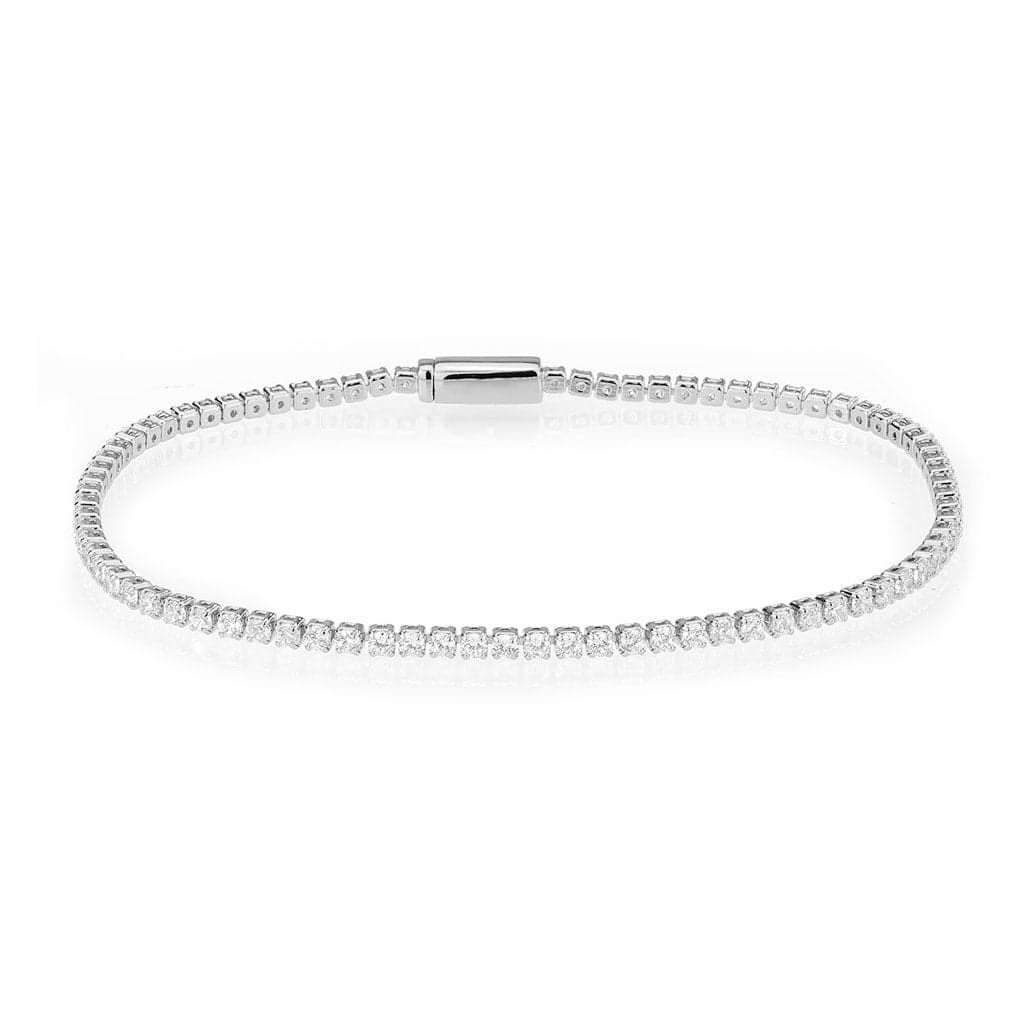
Our pick: Brass CZ Round Tennis Magnetic Bracelet — $25.49. A finer, daintier line of round CZ — the "barely there" one that stacks next to a watch. Rhodium-plated brass, magnetic clasp.
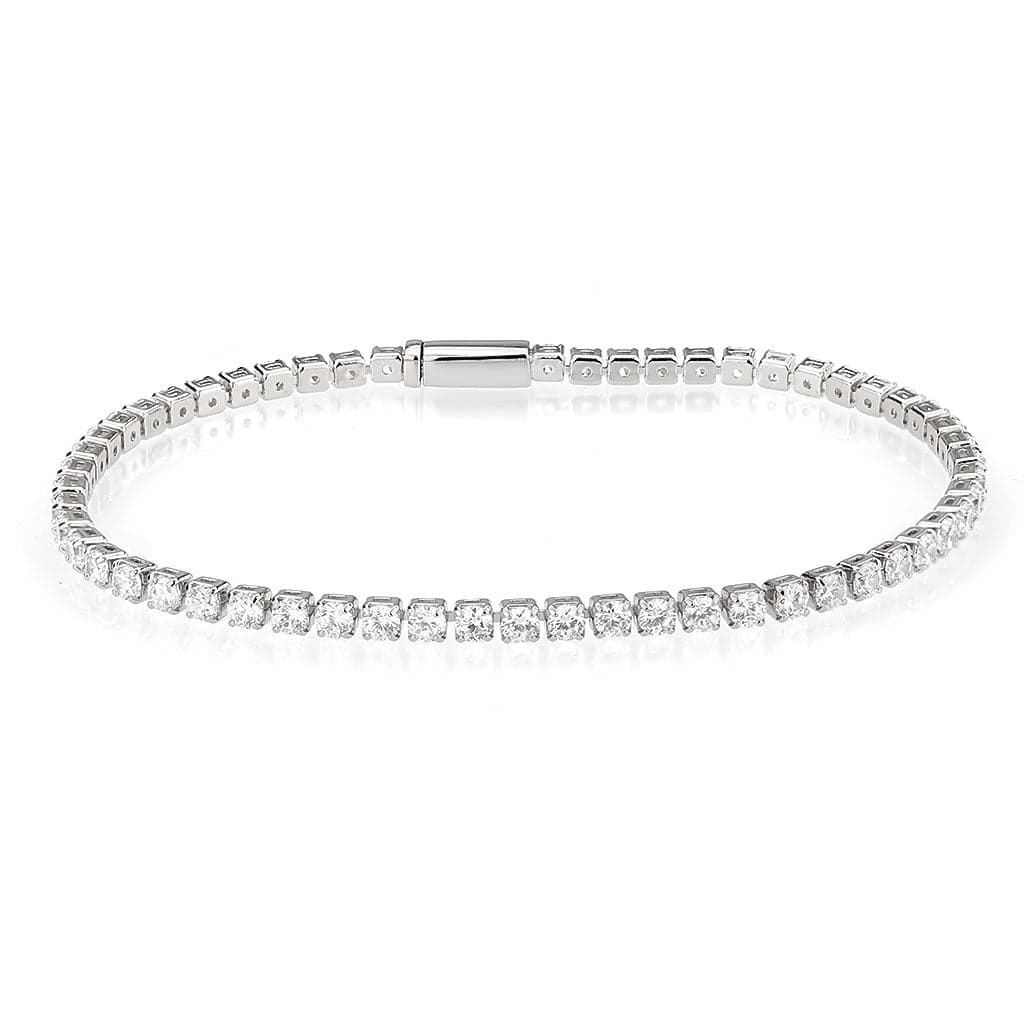
Our pick: Brass CZ Square Tennis Magnetic Bracelet — $25.49. Square-cut CZ set edge to edge, so you see a near-solid line of sparkle and very little metal. A crisper, slightly more modern look than rounds.
Gold and rose gold tennis bracelets
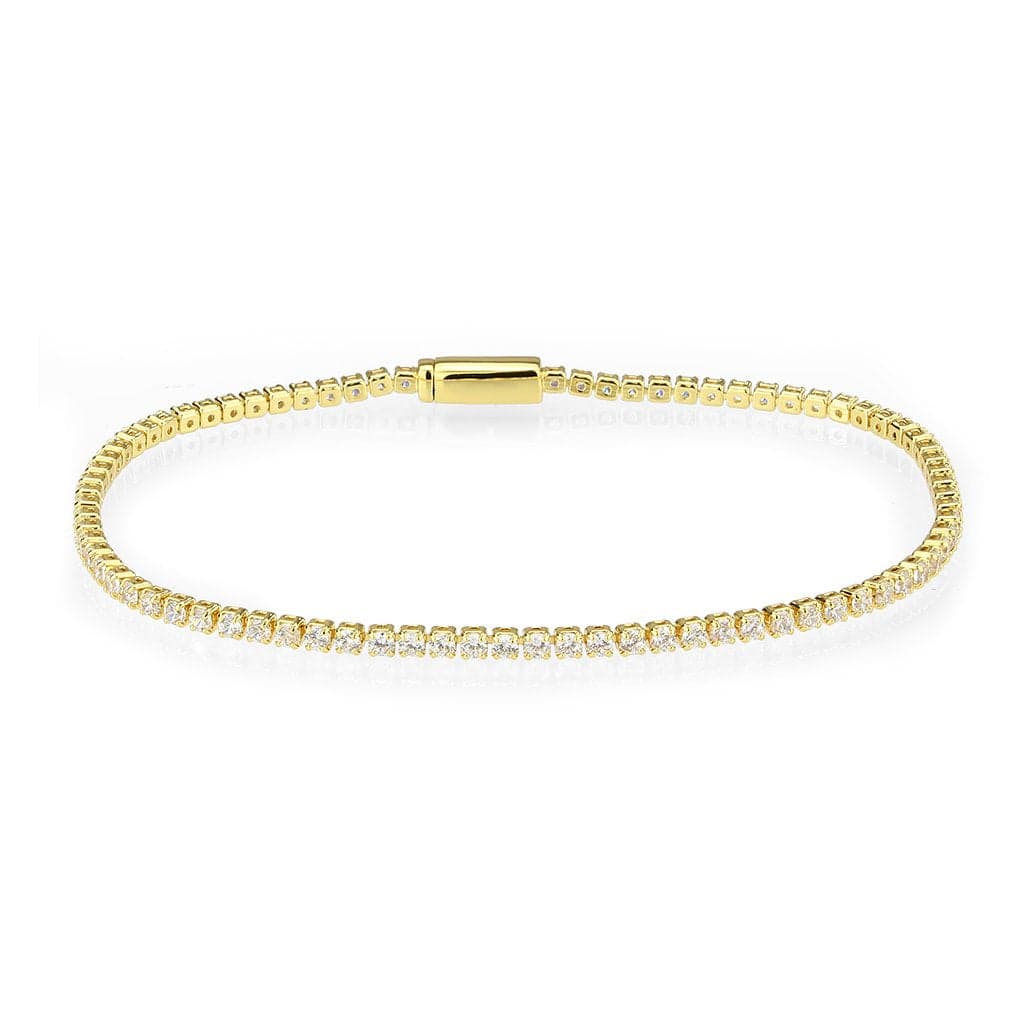
Our pick: Brass Gold CZ Round Tennis Magnetic Large Bracelet — $24.99. The gold tennis bracelet in its simplest form: round CZ in a gold-tone setting. It's gold-plated brass, not solid gold, so keep it away from water and perfume to protect the finish.
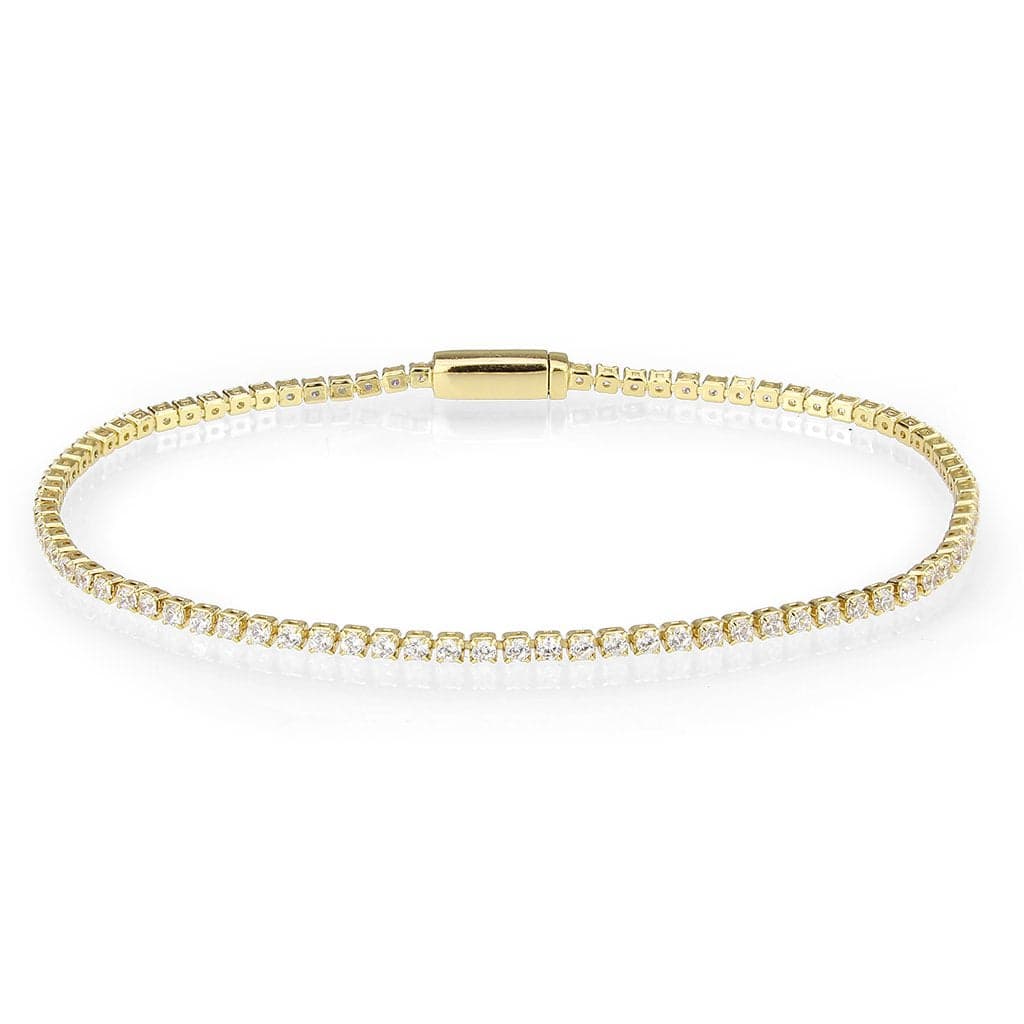
Our pick: Brass Gold CZ Round Tennis Magnetic Clasp Bracelet — $24.49. A slimmer gold-tone line of round CZ — the one to layer with bangles or a gold watch. Magnetic clasp, gold-plated brass.
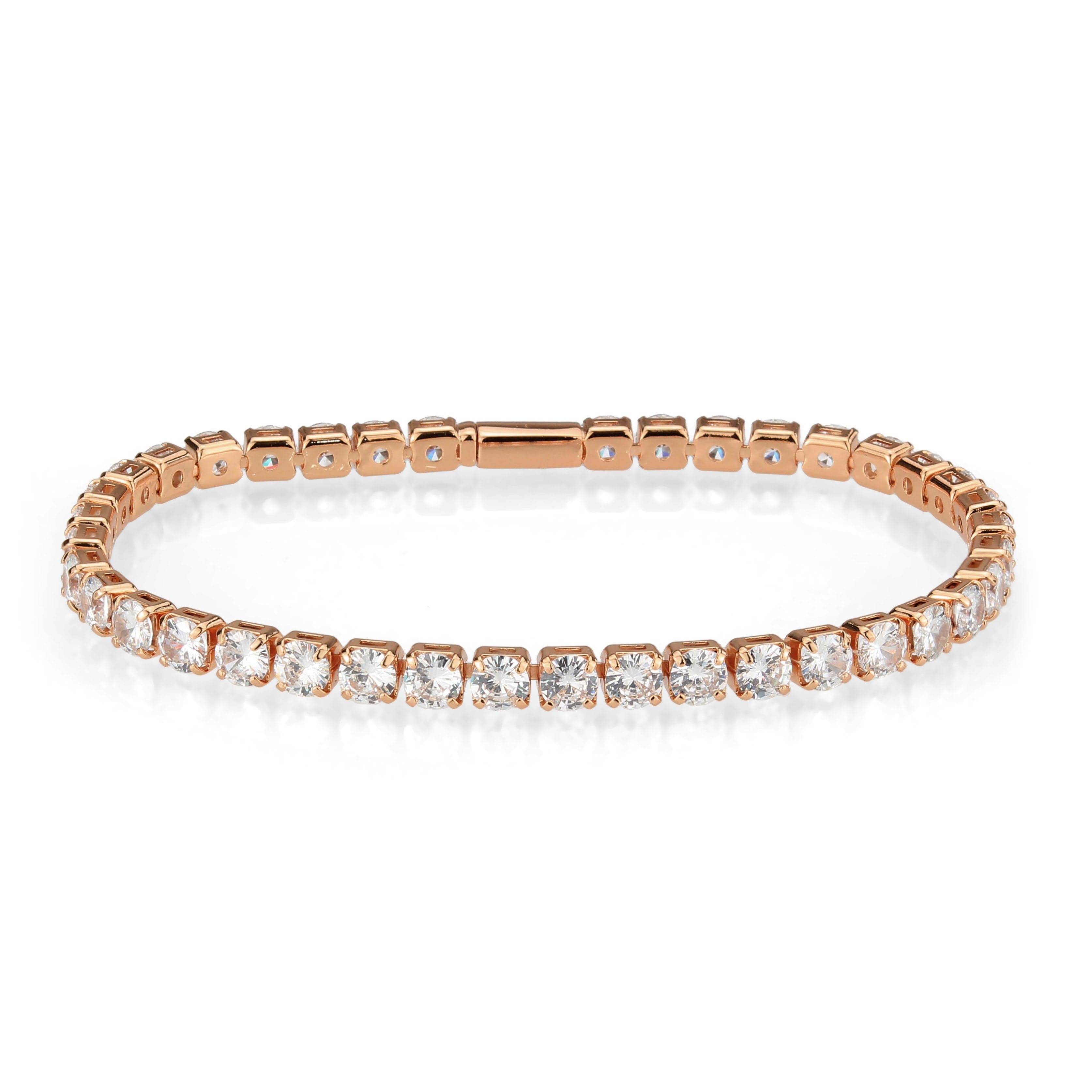
Our pick: Brass Rose Gold CZ Round Tennis Thin Bracelet — $27.99. Rose gold tennis bracelets are a steady favorite, and this one has slightly bigger round CZ than the thin gold pieces, so it reads a touch bolder. Rose-gold-tone plated brass.
Adjustable (for gifts or in-between wrists)
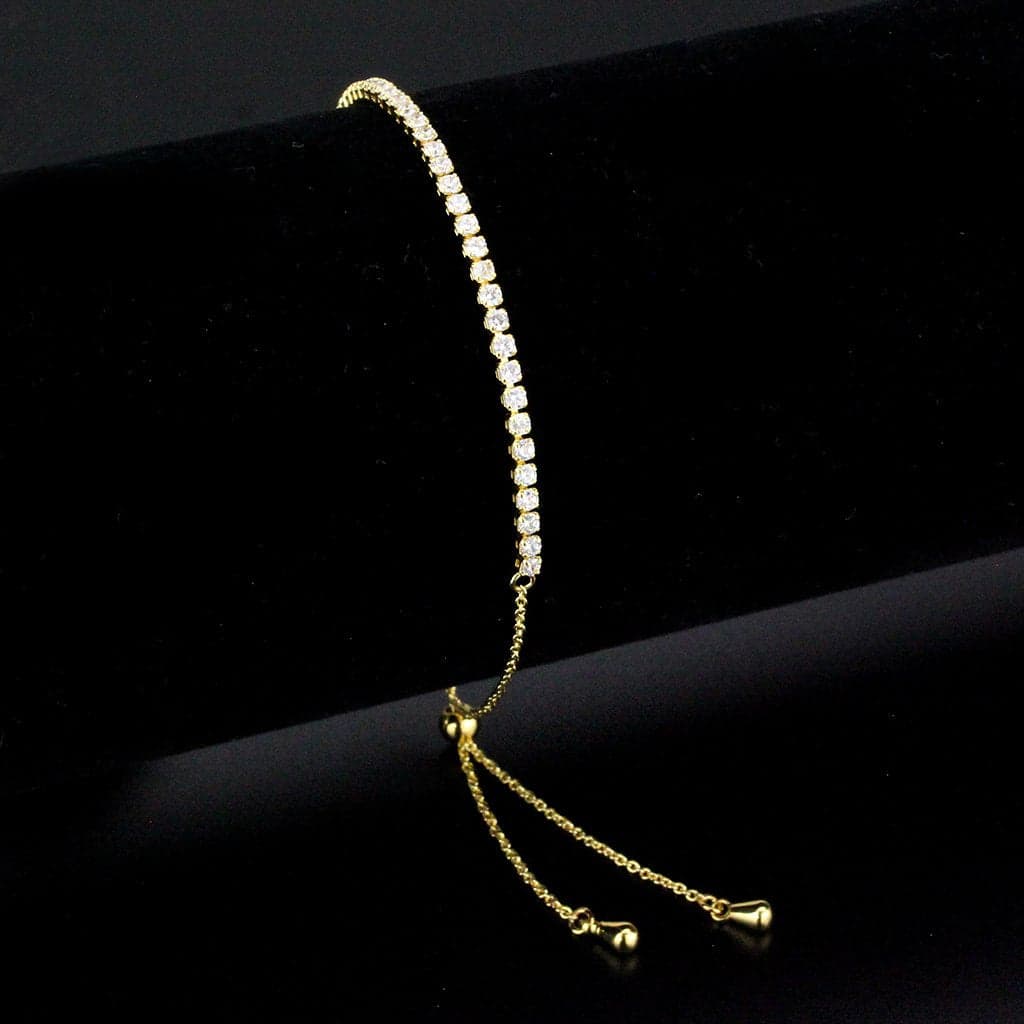
Our pick: Brass Gold CZ Tennis Adjustable Slider Bracelet — $23.49. A line of small CZ on the top of the wrist, finished with a fine chain and a slider bead underneath, so you set the fit yourself. Not a full 360-degree line — the back is chain — but the easiest tennis-style gift when you don't know the size.
Baguette tennis bracelets
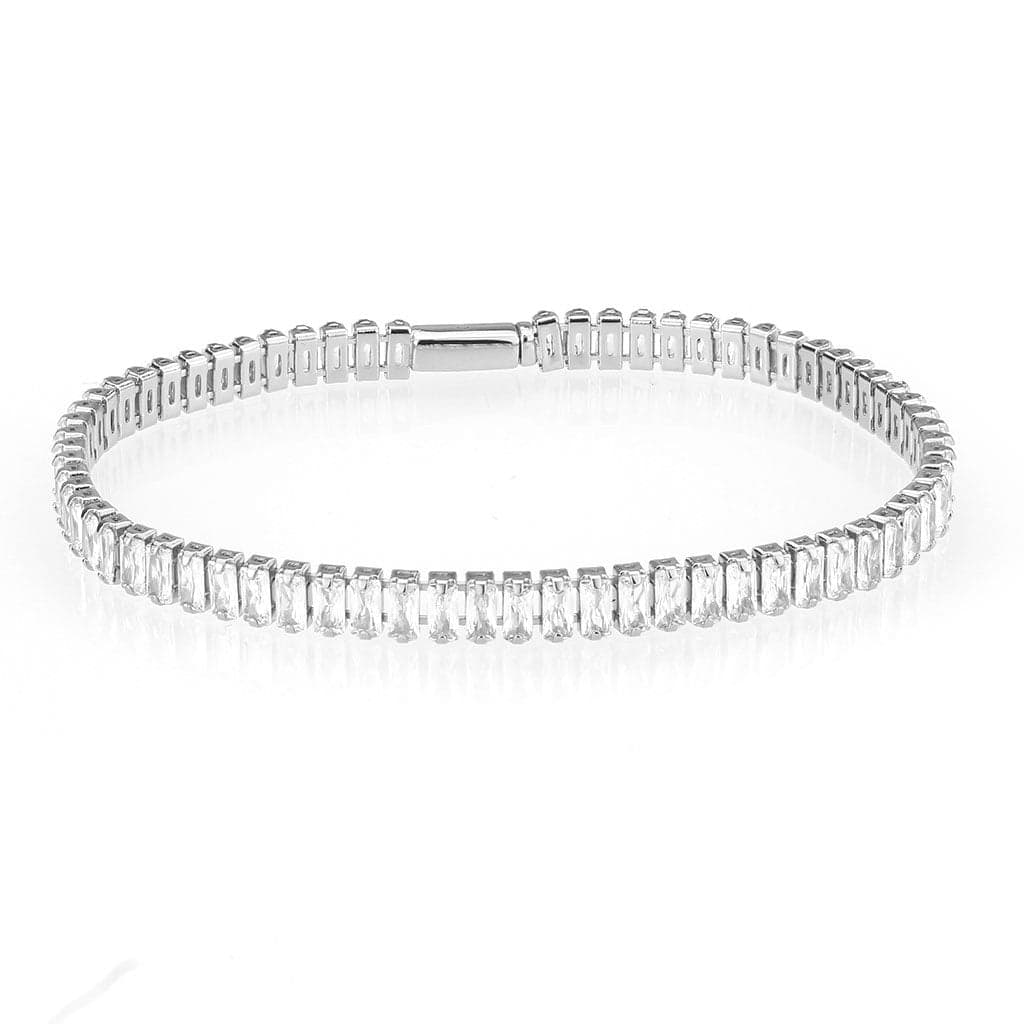
Our pick: Brass CZ Baguette Tennis Magnetic Bracelet — $31.99. Baguette CZ set side by side in a continuous row — the full, polished baguette look.
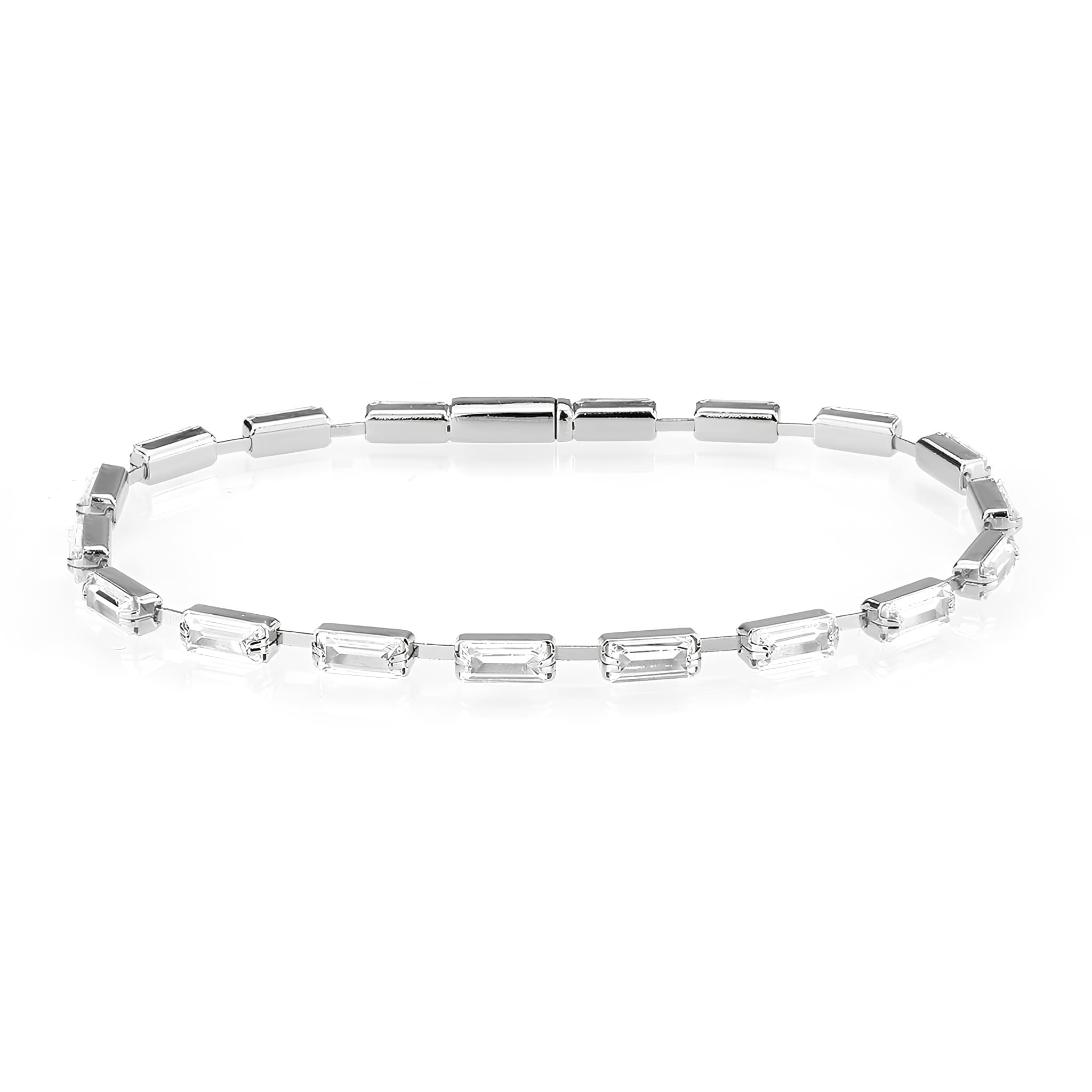
Our pick: Brass CZ Baguette Bar Tennis Thin Bracelet — $27.99. A more open take: individual baguette CZ in little bar-shaped links with space between them. Lighter and more minimal — a nice contrast to a round line in a stack.
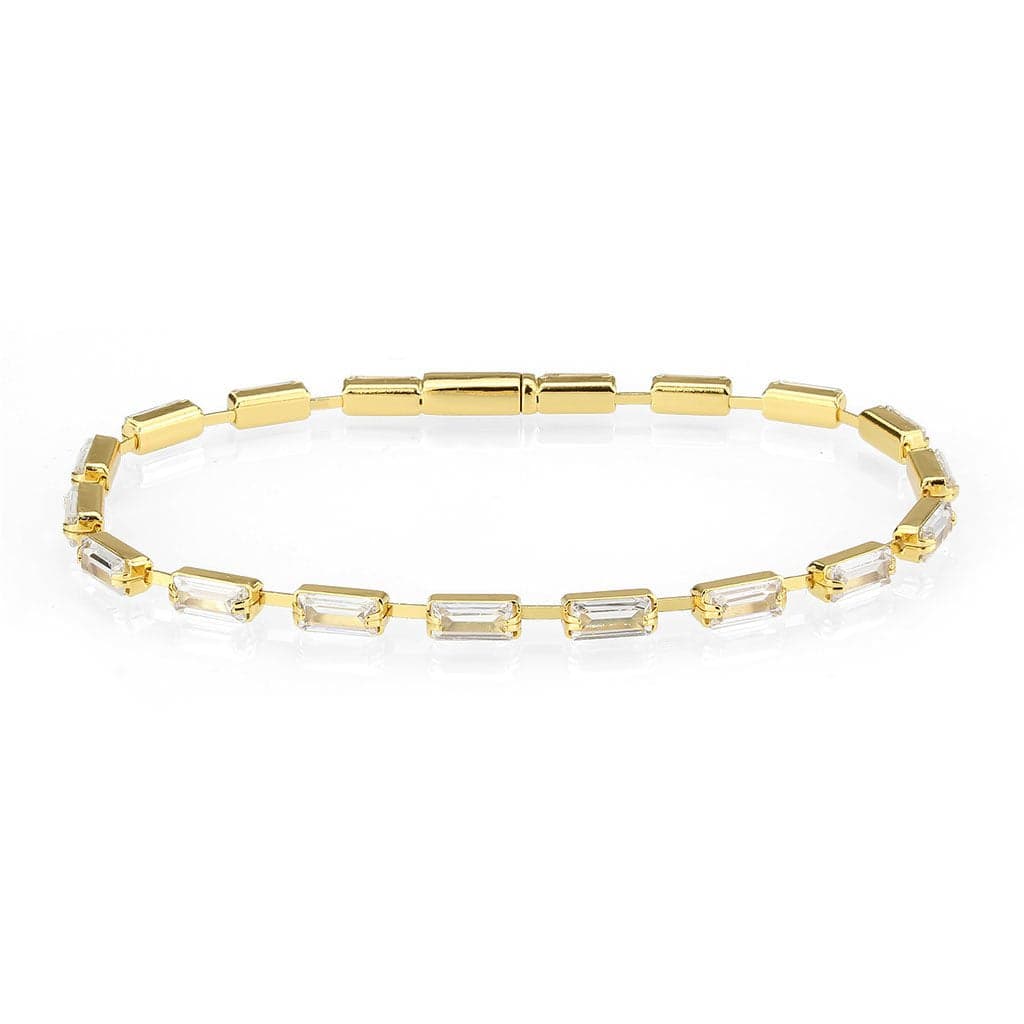
Our pick: Brass Gold CZ Baguette Tennis Thin Bracelet — $26.99. The same idea in gold tone: slim bars and baguette CZ, spaced out along the wrist. Gold-plated brass.
Marquise and bezel tennis bracelets
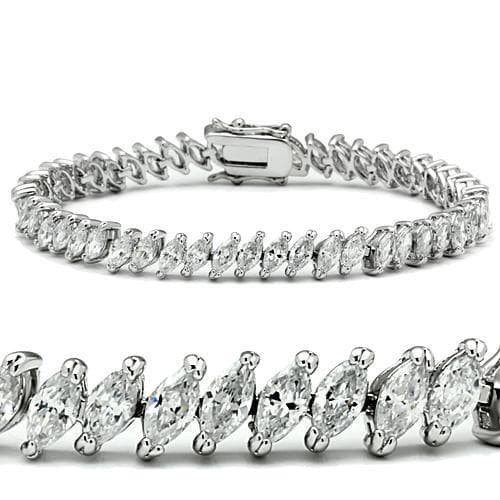
Our pick: Brass Marquise CZ Tennis Bracelet — $87.49. Marquise CZ set at a slant, one after another, so the line looks like a vine of leaves. A substantial piece with a box-style clasp — more occasion than everyday. Rhodium-plated brass.
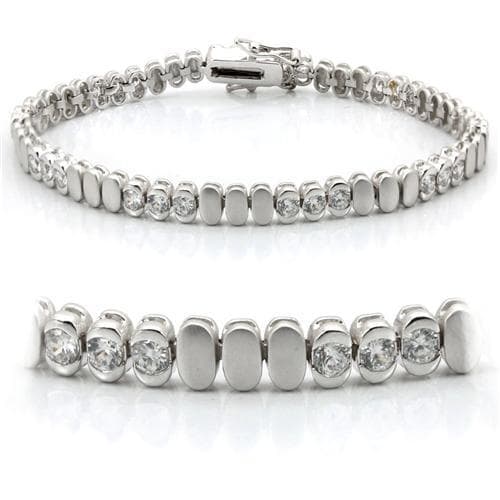
Our pick: Brass CZ Round Bezel Bar Link Tennis Bracelet — $75.49. Our bezel tennis bracelet: round CZ each wrapped in a smooth metal rim, alternating with polished bar links. It catches on nothing and looks great with a watch. Candidly, it's not a continuous line of stones — the polished links break it up — which is the point of this design.
Colored tennis bracelets
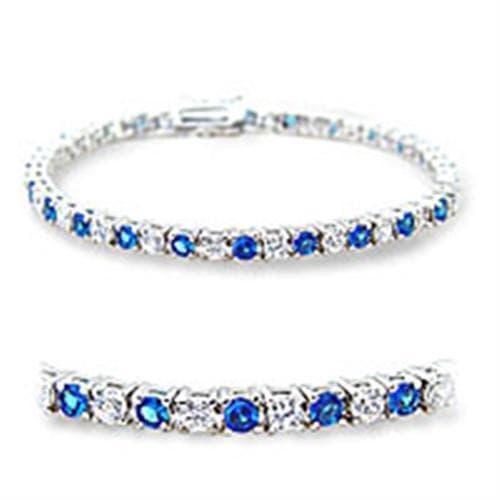
Our pick: Brass Sapphire CZ Round Alternating Tennis Bracelet — $83.49. Blue and clear round CZ alternating on a silver-tone line. "Sapphire" here is the color — the blue stones are CZ, not sapphires.
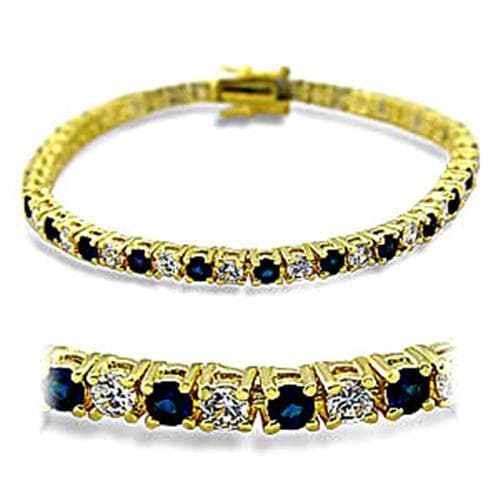
Our pick: Brass Gold Sapphire CZ Round Alternating Tennis Bracelet — $33.49. The same blue-and-clear rhythm in gold tone, at a much friendlier price. Again: sapphire-blue CZ, not sapphire. Gold-plated brass.
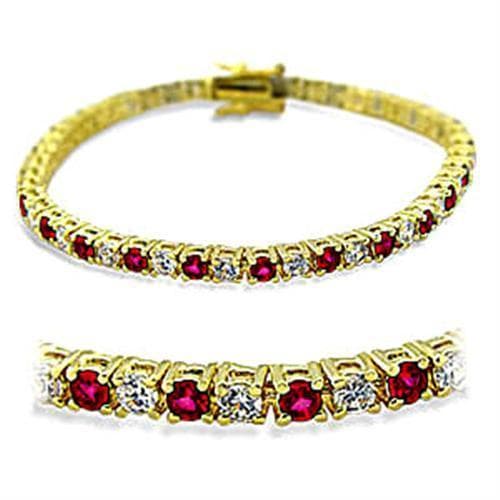
Our pick: Brass Gold Ruby CZ Round Alternating Tennis Bracelet — $90.49. Ruby-red and clear CZ alternating on gold tone — warm, festive and very classic. The red stones are CZ in a ruby color, not rubies.
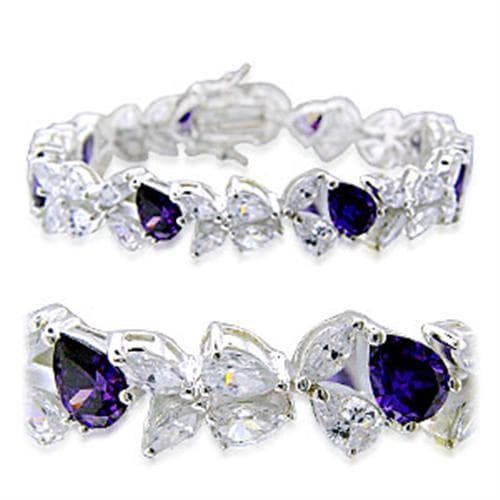
Our pick: Sterling Silver Tanzanite Pear CZ Tennis Bracelet — $145.99. The statement piece: large pear-shaped CZ in clear and violet, set in sterling silver. "Tanzanite" describes the color — the violet stones are CZ. It's bold rather than dainty, and our only sterling silver tennis bracelet in stock right now; sterling can tarnish, so store it in a pouch.
What we don't have (yet)
We're not going to fake these. There's no emerald-green tennis bracelet in stock in a reliable size right now, no opal version, and no tennis bracelet designed specifically for men. If you're shopping for a men's tennis bracelet, look for 4–5 mm stones, a box clasp with a safety catch, and a length of 8 inches or more; none of our current pieces is a good fit for that brief.
How to wear a tennis bracelet
- Solo, every day. A thin silver- or gold-tone line with a T-shirt is the whole point of the design.
- With a watch. The classic stack: watch on, tennis bracelet right next to it. Bezel and baguette styles are especially good here because they won't scratch the watch case as much as prongs.
- The tennis bracelet stack. Two or three thin lines of different shapes — round, baguette, square — in the same metal.
- With bangles. A tennis line tucked between a couple of smooth bangles and cuffs adds sparkle without clutter.
How to care for a tennis bracelet
- Take it off for water. Plated brass and sterling silver both prefer to stay dry — shower, pool, beach and hot tub are the fastest ways to wear down a plated finish.
- Perfume and lotion first, bracelet last. Chemicals dull CZ and plating.
- Clean gently. Warm water, mild dish soap, a soft toothbrush behind the stones, then dry thoroughly.
- Check the clasp. Remember Chris Evert. Every few weeks, make sure the clasp closes firmly.
- Store it flat. Lay it straight in a pouch or lined box so the links don't kink and stones don't knock against other jewelry.
FAQ
What is a tennis bracelet? A tennis bracelet is a flexible bracelet made of a single continuous line of stones, each individually set and linked to the next. Traditionally the stones are round diamonds, but today they come in every stone and metal.
Why is it called a tennis bracelet? The name is usually traced to tennis champion Chris Evert, whose diamond line bracelet broke and fell onto the court during a US Open match; she stopped play to find it and later called it her "tennis bracelet." Evert's own retelling dates it to 1978, though many sources say 1987.
How should a tennis bracelet fit? Close to the wrist but loose enough to slide a finger underneath and move freely. Measure your wrist and add roughly half an inch to an inch; most women wear 6.5 to 7 inches.
Is a CZ tennis bracelet worth it? Yes, if you want the look without the price. Cubic zirconia is bright and fiery, but it is softer than diamond or moissanite, so it can lose some crispness over years of wear and needs regular cleaning.
Can men wear tennis bracelets? Absolutely — men's tennis bracelets are a growing category, usually with larger stones and a longer length. We don't currently carry a men's-specific design.
Want more options? Browse our tennis bracelets, chain bracelets, or all bracelets. Every US order ships free, with 30-day returns.
All bracelets in this guide are set with cubic zirconia; color names such as "sapphire," "ruby" and "tanzanite" describe the stone color, not the gemstone. Tiffany & Co., Cartier, Pandora, Swarovski, Chris Evert and any other brands or people named here are mentioned for reference only; none of our bracelets is affiliated with, endorsed by, or a replica of any brand, designer or person named. The Chris Evert story is drawn from public reporting and her own recollections, which differ on some details.