The December birthstone is actually three stones: turquoise, zircon and tanzanite make up the official modern US list, and all three share one color family — blue, from sky blue to violet-blue. Blue topaz is also widely sold as a December birthstone, but it isn't on the official list (more on that below).
This guide covers what each December birthstone looks like, where it comes from, the folklore attached to it, how tough it is, and how to pick between them. Then, because most of us aren't buying a $2,000 tanzanite this year, there's a short list of December-blue rings, earrings and necklaces from our shop — all under $35, all clearly labeled as CZ, crystal or simulated stones.
What is the December birthstone?
Short answer: turquoise, zircon and tanzanite. Here's how December ended up with three.
The first standardized US birthstone list was published in 1912 by the National Association of Jewelers (today's Jewelers of America). December got turquoise, with lapis lazuli as an alternate. In 1952 the Jewelry Industry Council of America revised the list and swapped lapis lazuli for zircon. Then in 2002 the American Gem Trade Association added tanzanite, a gem that had only been on the market since the late 1960s. That's the list most US jewelers and gem labs use today: turquoise, zircon, tanzanite.
Other countries don't all agree. The UK's list, updated in 2013, gives December just tanzanite and turquoise.
Is blue topaz a December birthstone?
It depends on whose list you're reading. Blue topaz does not appear on the official US list (1912, 1952 or the 2002 update), and it isn't on the UK list either. But it's so commonly sold for December that many jewelers treat it as an alternative, and GIA's own topaz page calls blue topaz "a birthstone for December." (Classic golden topaz belongs to November.)
So: blue topaz is a popular alternative December birthstone, not one of the official three. Buying for a stickler? Pick turquoise, zircon or tanzanite.
December birthstone color: blue, in three shades
If someone asks what color the December birthstone is, the answer is blue. Each stone owns a different part of the blue spectrum:
- Turquoise: opaque robin's-egg or sky blue, sometimes leaning green, often with dark veins (called matrix).
- Blue zircon: a bright, transparent, slightly electric blue with a lot of sparkle.
- Tanzanite: a rich violet-blue that shifts toward purple depending on the angle.
- Blue topaz (alternative): clear pale-to-deep blue, sold in shades the trade calls sky, Swiss and London blue.
December birthstones at a glance
| Stone | Color | Hardness (Mohs) | Status | Best for |
|---|---|---|---|---|
| Turquoise | Opaque sky blue to green-blue | 5–6 | Official (the original December stone) | Pendants, earrings, occasional-wear rings |
| Zircon | Bright transparent blue | 6–7.5 | Official | Earrings, pendants; rings with care |
| Tanzanite | Violet-blue | 6–7 | Official (newest) | Earrings and pendants |
| Blue topaz | Sky blue to deep London blue | 8 | Popular alternative, not on the official list | Everyday rings |
Turquoise: the original December birthstone
Color: opaque sky blue to green-blue, with or without dark veining. Hardness: 5–6 on the Mohs scale — softer than most gems. Where it's from: Iran's Nishapur district produced fine turquoise for more than a thousand years; today much of it comes from Arizona, Nevada and China.
Turquoise is one of the oldest gems in human use. Egyptian pharaohs wore it, Persians treated it as a kind of national stone and covered buildings and objects with it, and the Aztecs set it into ceremonial mosaics. The name comes from Old French for "Turkish," because the stone reached Europe along Ottoman trade routes — even though it was never actually mined in Turkey.
Turquoise meaning and folklore
Traditionally, turquoise has been associated with protection and good fortune. According to GIA, it was once believed to protect riders from falling and to break apart before disaster struck. The Apache believed turquoise could be found by following a rainbow to its end, and that attaching it to a bow or firearm improved aim. These are traditions, not properties.
Caring for turquoise
Turquoise is porous and relatively soft, so most turquoise on the market is stabilized (treated with a resin or wax) to make it more durable. Clean it with warm soapy water only; skip steam and ultrasonic cleaners, and keep it away from heat, perfume and lotion. Many "turquoise" pieces sold cheaply are dyed howlite or magnesite, or fully simulated — which is fine if it's labeled that way.
Zircon: the most misunderstood December birthstone
Color: zircon comes in many colors, but blue is the most popular for December. Hardness: 6–7.5 on the Mohs scale. Where it's from: Sri Lanka and Australia are among the notable sources.
First, the big one: zircon is not cubic zirconia. Zircon is a natural mineral that has been used as a gem for centuries. Cubic zirconia (CZ) is a lab-made crystal first produced commercially in the 1970s. Both have been used to imitate diamond, which is why they get mixed up constantly.
Most blue zircon on the market gets its color from heat treatment, which is standard practice and considered normal in the trade.
Zircon meaning and folklore
During the Middle Ages, zircon was believed to bring deep sleep and to scare off evil spirits, according to GIA. Again: tradition, not a promise.
Caring for zircon
Zircon is reasonably hard but brittle, so facet edges can chip if knocked against things. Clean with a soft brush and mild soap and avoid ultrasonic and steam cleaners. It's happiest in pendants and earrings, or in rings worn with some care.
Tanzanite: the newest December birthstone
Color: violet-blue; the purest, deepest blues are the most prized. Hardness: 6–7 on the Mohs scale. Where it's from: only one place on Earth mines it commercially — the Merelani Hills of northern Tanzania, near Mount Kilimanjaro.
Tanzanite is a blue-violet variety of the mineral zoisite. It was identified in 1962 and commercially mined from 1967, and in 1968 Tiffany & Co. gave it the name "tanzanite" (after Tanzania) and began promoting it.
Tanzanite is pleochroic: it shows different colors — blue, violet, and sometimes burgundy — depending on the angle you look at it from. Nearly all tanzanite on the market is heat-treated to remove brownish tones and bring out the blue-violet, and that treatment is so universal it's simply assumed.
Tanzanite meaning
Because it's so new, tanzanite doesn't have ancient folklore the way turquoise and zircon do. Its appeal is modern: it comes from a single place on the planet.
Caring for tanzanite
GIA suggests tanzanite is better suited to earrings and pendants than to rings worn every day, because it can scratch and chip. Clean with warm soapy water only.
Blue topaz: the popular alternative
Color: pale sky blue to deep inky "London" blue. Hardness: 8 on the Mohs scale — the hardest of the December options. Why it's so common: almost all blue topaz starts as colorless topaz and is irradiated (and usually heated) to turn it blue, which makes it plentiful and affordable.
Topaz is hard, but it has perfect cleavage, meaning a sharp knock in the wrong direction can split it. Blue topaz is also the traditional gem for a 4th wedding anniversary, which is a nice bonus fact if you're shopping for a December-born spouse.
Which December birthstone should you choose?
- Want everyday durability? Blue topaz (hardness 8) or blue zircon handled with a little care. In budget jewelry, blue CZ gets the same look and is tough enough for daily wear.
- Love boho, Southwest or vintage styles? Turquoise — nothing else gives that opaque, veined sky blue.
- Want something deeper, moodier and more "evening"? Tanzanite's violet-blue.
- Buying for a traditionalist? Stick to the official three: turquoise, zircon or tanzanite.
December birthstone jewelry under $35: our picks
Before the picks, the honest part. Nothing below is a real turquoise, zircon, tanzanite or topaz. The stones are cubic zirconia (CZ), crystal, or simulated turquoise; one piece is enamel. Our product titles use gem names to describe the color — "Blue Topaz," "Tanzanite," "Turquoise" — not the material. What you're buying is the December color in a piece you can actually wear every day, mostly in stainless steel. Prices were checked on September 29, 2026 and can change.
Turquoise-color picks
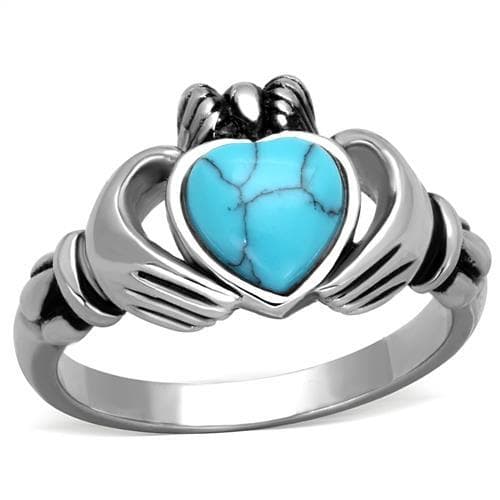
Our pick: Stainless Steel Turquoise Heart Claddagh Ring — $21.99. A veined, turquoise-blue heart held by the classic Claddagh hands, in stainless steel, sizes 5–10. The stone is simulated turquoise with painted-on-looking matrix veins, not natural turquoise — but as a December birthday ring with a bit of meaning built into the design, it's hard to beat for the price.
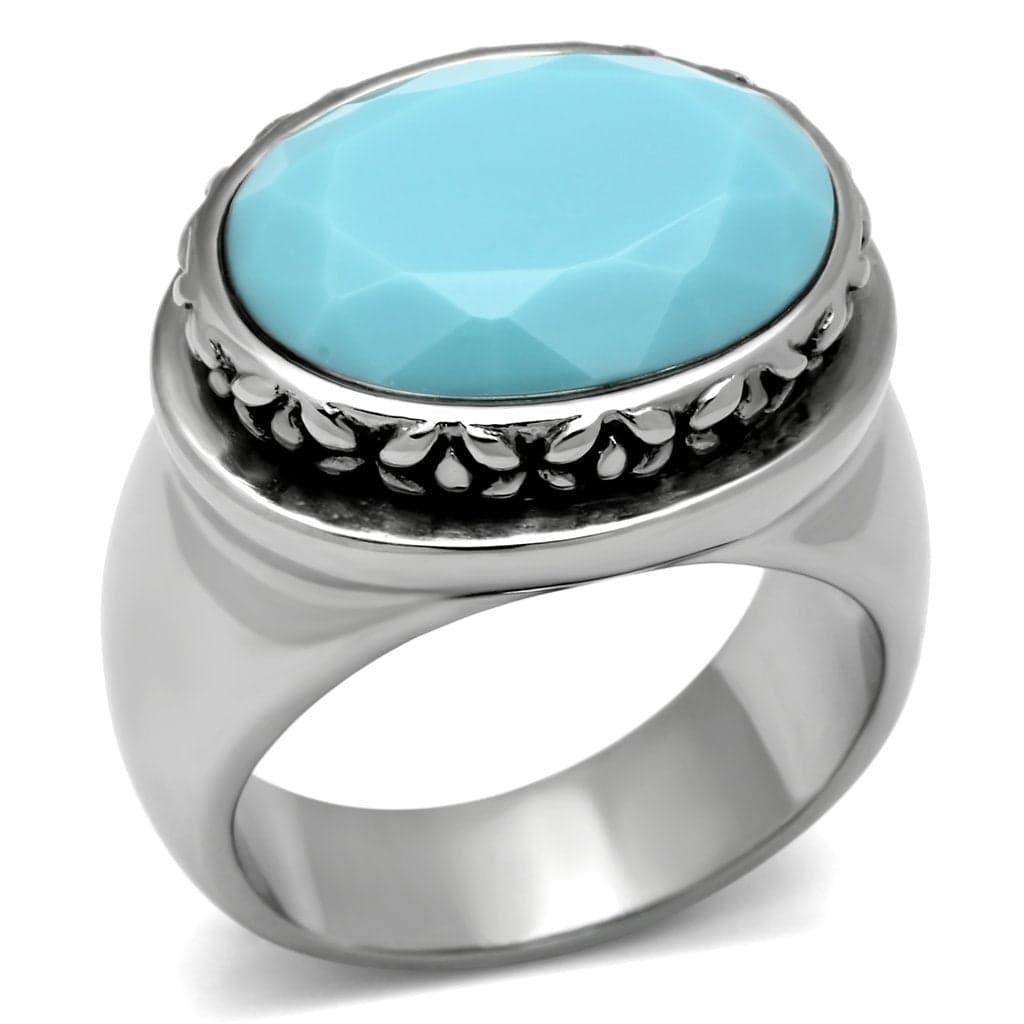
Our pick: Stainless Steel Silver Turquoise Cabochon Oval Beaded Bezel Ring — $22.49. A big, bold oval of solid sky blue on a chunky steel band with a beaded bezel. The stone is a faceted simulated turquoise with no veining, so it reads cleaner and brighter than natural turquoise. This is a statement ring, not a stacker.
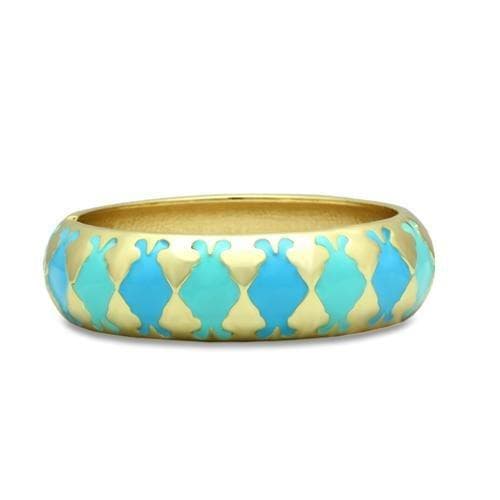
Our pick: Gold Turquoise Enamel Diamond Pattern Hinged Bracelet — $19.99. If you want a December birthstone bracelet without stones at all: a hinged gold-tone bangle with a diamond pattern in two shades of turquoise enamel. It's gold-finish brass with enamel, so treat it like any plated piece — keep it dry and off during workouts. Sized at 7 inches.
Blue topaz and blue zircon color picks
We don't sell anything labeled "zircon," but bright blue CZ is the closest everyday match for blue zircon's icy color — and for blue topaz.
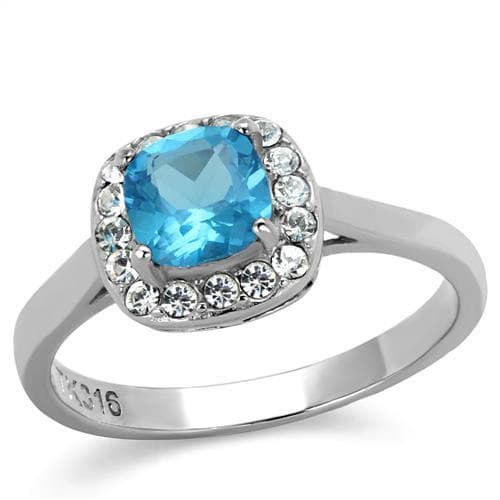
Our pick: Stainless Steel Blue Topaz Cushion CZ Halo Ring — $20.99. A bright blue cushion-cut CZ in a halo of clear CZ, stainless steel, sizes 5–10. The color sits right between Swiss blue topaz and blue zircon. It's CZ, not topaz — "Blue Topaz" in the name is the color.
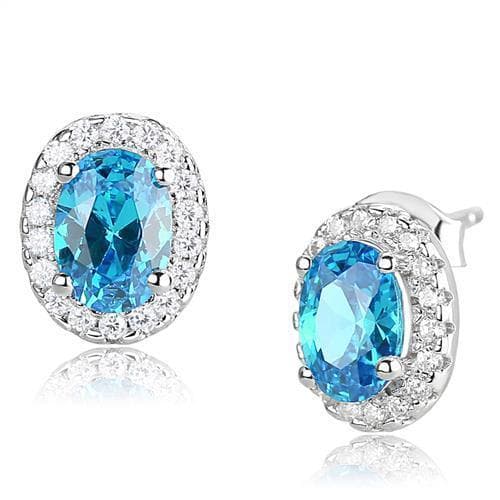
Our pick: Sterling Silver Blue Topaz Oval Halo Stud Earrings — $31.49. Oval blue CZ studs in a clear CZ halo, sterling silver. Brighter and whiter metal than steel, which makes the blue pop — just store them dry, since silver can tarnish over time. The blue is CZ, not topaz.
Tanzanite-color picks
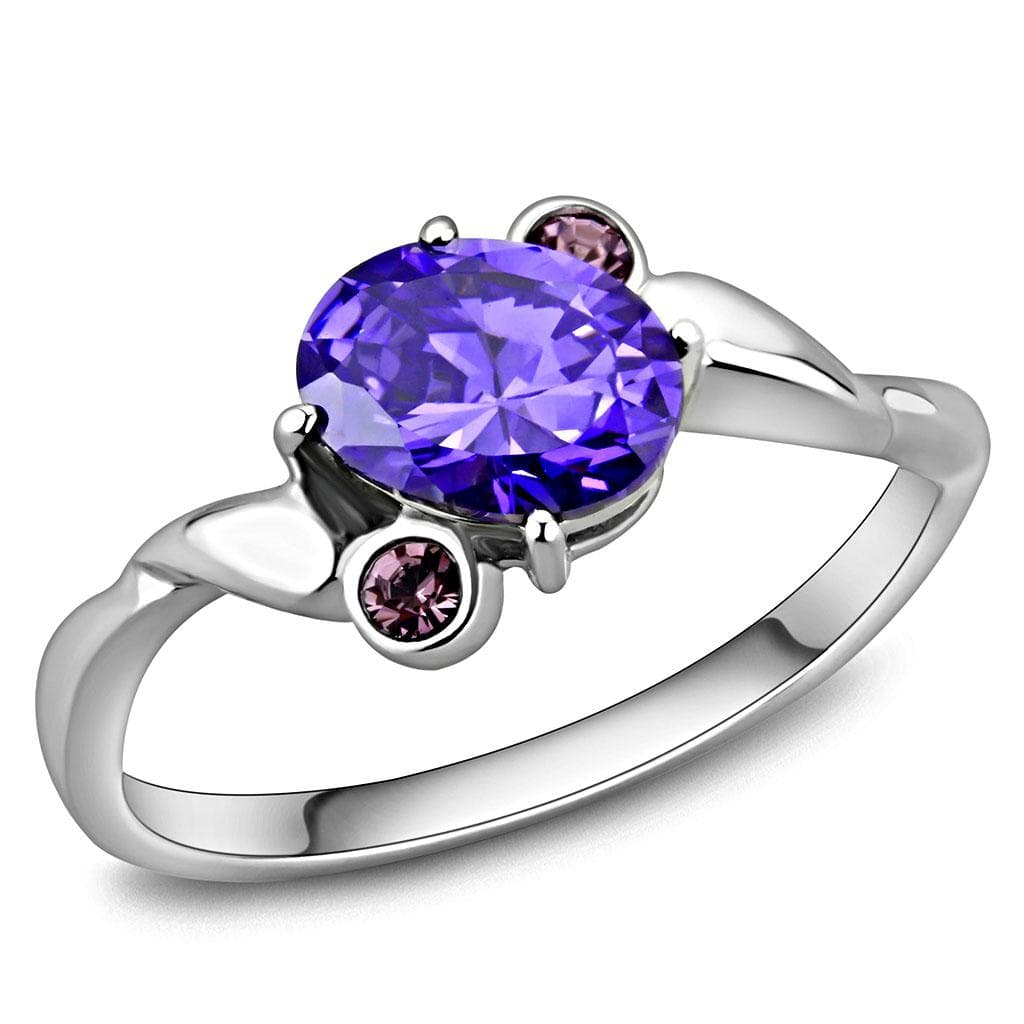
Our pick: Stainless Steel Tanzanite Purple Oval CZ Pink Accent Bypass Ring — $19.49. A violet oval CZ on a slim bypass band with two small pink accents, stainless steel, sizes 5–10. The main stone leans more purple than a top-color tanzanite, which tends toward blue, but it has that same violet mood. The cheapest pick in this guide.
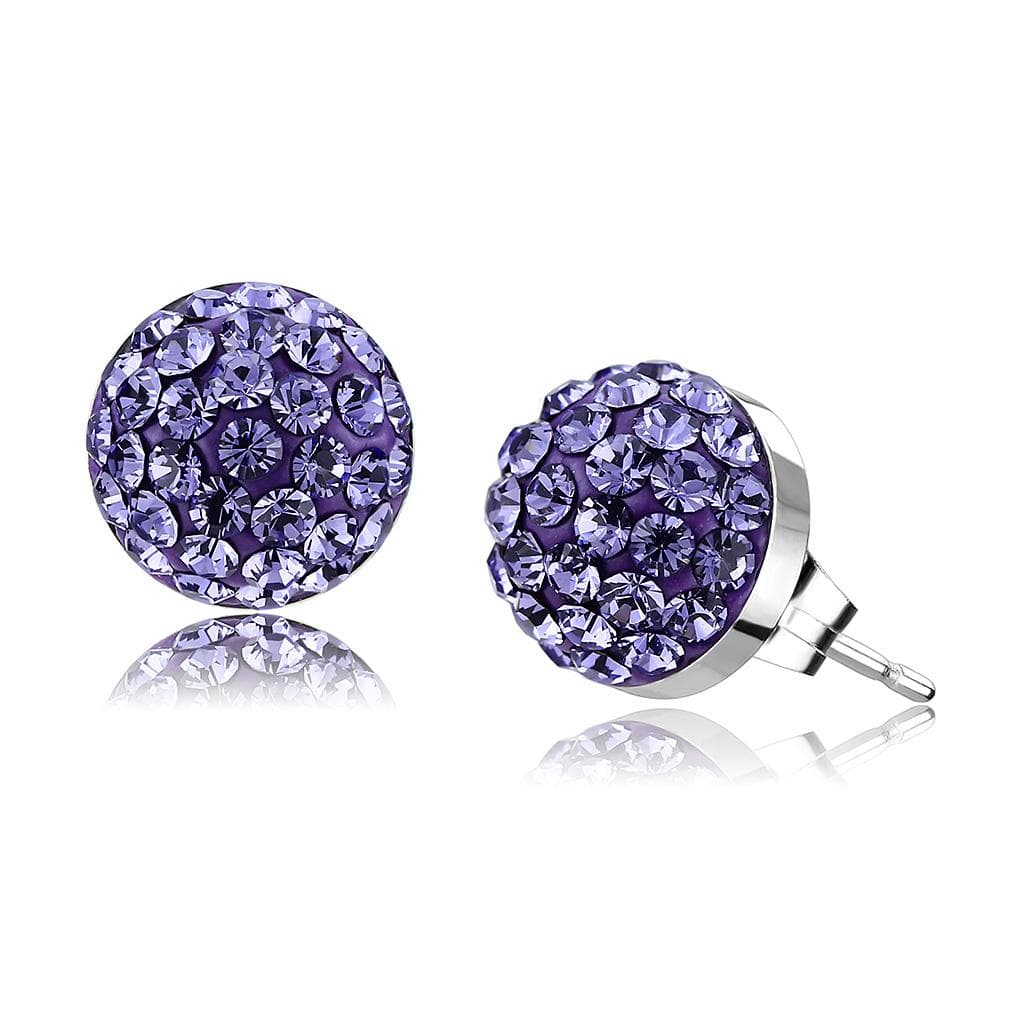
Our pick: Stainless Steel Silver Tanzanite Purple Crystal Pave Earrings — $19.49. Round domed studs packed with purple and violet crystals, on stainless steel posts. They lean purple rather than blue.
Buying December birthstone jewelry: the honest checklist
Know what the stone really is. Gem names in product titles are often color names. A real tanzanite, zircon or turquoise will say so clearly, usually with a much higher price.
Match the metal to the wearer. Stainless steel is hypoallergenic for most people, doesn't tarnish, won't turn skin green, and handles water and sweat. Gold-tone steel is IP (ion-plated) — durable, but still a finish. Plated brass is lovely for occasional wear but should be kept dry. Sterling silver is brighter and can tarnish over time.
Get the ring size right first. Stainless steel rings can't be resized, so use our ring size chart before you order.
Look after the stones. CZ is hard (about 8 to 8.5 on the Mohs scale) and holds its sparkle for years. Clean with warm water, a drop of dish soap and a soft toothbrush, and dry well. Keep simulated turquoise and crystal pieces away from perfume, lotion and harsh cleaners.
Every US order ships free, and there's a 30-day return window from delivery if the piece is unworn with its tags and packaging.
FAQ
What is the December birthstone? The official December birthstones are turquoise, zircon and tanzanite. Blue topaz is a popular alternative that many jewelers sell for December, but it isn't on the official US list.
What color is the December birthstone? Blue. Turquoise is an opaque sky blue, blue zircon is a bright transparent blue, and tanzanite is a violet-blue. Blue topaz, the popular alternative, runs from pale sky blue to deep London blue.
Does the birthstone change depending on the date in December? No. Whether you were born on December 1, December 25 or December 31, the birthstones are the same for the whole month: turquoise, zircon and tanzanite.
What does the December birthstone mean? Traditionally, turquoise has been associated with protection and good fortune, and in the Middle Ages zircon was believed to bring restful sleep and ward off evil spirits. Tanzanite is too new to have old folklore; its appeal is its single source in Tanzania.
Is zircon the same as cubic zirconia? No. Zircon is a natural mineral and one of December's birthstones. Cubic zirconia (CZ) is a lab-made crystal with a similar name, commonly used as a diamond simulant.
Which December birthstone is the most durable? Among the three official stones, zircon and tanzanite are harder than turquoise, but both can chip. Blue topaz is the hardest of the December options at 8 on the Mohs scale, though it can still split from a hard knock.
More birthstone guides
December is one stop in our birthstone series. Start with the complete birthstone chart for all 12 months, or jump to another month:
- June birthstone: pearl, moonstone and alexandrite
- August birthstone: peridot, spinel and sardonyx
- October birthstone: opal and tourmaline
Sources: GIA — December Birthstones; American Gem Society — December Birthstones.
Want more December blue? Shop all December birthstone jewelry, or browse halo rings, solitaires, stud earrings or pendant necklaces.
All stones in the products above are cubic zirconia, crystal, simulated turquoise or enamel; gem names in product titles describe color only. Birthstone meanings are shared as history and tradition, not claims. Tiffany & Co. is mentioned for historical context only and is not affiliated with or endorsing this store or these products.