The October birthstone is actually two stones: opal and tourmaline. Opal is the traditional one, famous for its flashes of rainbow color, and tourmaline — especially pink tourmaline — is the modern alternative, added to the US birthstone list in 1952. Born in October? You get to choose, and plenty of people wear both.
Below: what each October birthstone looks like, where the meanings come from, how hard (or delicate) each one is, and how to choose. Then, because not everyone wants to spend opal money, a short list of October-colored pieces from our shop under $40 — simulated opal, opal-look glass and pink cubic zirconia, each described exactly as what it is.
What is the October birthstone?
The modern US birthstone list gives October two stones: opal and tourmaline. Opal has the longer history as October's gem. Tourmaline got its official foothold in 1952, when the Jewelry Industry Council suggested pink tourmaline as an alternate to opal. Today tourmaline in any color is widely accepted for October, but pink is still the shade most people mean.
Two practical notes before we go stone by stone:
- The same stones cover every day of the month. October 1 and October 31 share the same birthstones — there's no separate stone for October 7, 15 or 29.
- Libra and Scorpio season don't change it. Zodiac stone lists exist, but they vary a lot from source to source. If you're an October Libra, your month birthstones are still opal and tourmaline.
October birthstone color: what color is it?
There isn't one October birthstone color — that's the fun part.
Opal is best known as white or milky with flashes of every color (called play-of-color), but it also comes in black opal (dark body color), fire opal (orange to red, often without the rainbow flashes) and boulder opal (opal in its brown host rock).
Tourmaline comes in nearly every color there is — pink, red, green, blue, even two or three colors in one crystal. Pink is the one tied to October, from soft baby pink to the deep raspberry red called rubellite. Watermelon tourmaline, with pink, white and green bands, is a crowd favorite.
So when someone asks "what color is the October birthstone," the honest short answer is: iridescent white (opal) and pink (tourmaline). Most October jewelry leans on one or both.
October birthstones at a glance
| Stone | Color | Hardness (Mohs) | Status | Best for |
|---|---|---|---|---|
| Opal | Milky white with play-of-color; also black, fire and boulder opal | 5–6.5 | Traditional October stone | Earrings, pendants, occasional-wear rings |
| Tourmaline (pink) | Soft pink to raspberry red (rubellite) | 7–7.5 | Added as an October stone in 1952 | Everyday rings |
Opal: the traditional October birthstone
What makes opal flash
Opal's rainbow isn't pigment. According to GIA, the flashes come from light diffracting through tiny silica spheres stacked inside the stone, "like tiny Ping-Pong balls in a box." The size of the spheres decides which colors you see. Opal also holds water — up to about 20% — which matters a lot for care (more below).
Australia has been the world's main opal source since commercial mining started there in the 1890s, and it still supplies most of the opal on the market.
Opal history and folklore
The name is thought to trace back to the Sanskrit upala, "precious stone," by way of the Latin opalus. Opal has collected a lot of stories along the way:
- Bedouins once believed opal held lightning and fell from the sky during thunderstorms.
- Ancient Greeks thought opals gave the gift of prophecy and protection from disease.
- In Europe, opal was long treated as a symbol of purity, hope and truth.
That's the opal October birthstone meaning you'll see repeated online: hope, purity, creativity, a bit of magic. Treat it as tradition — lovely to know, not a promise.
Is opal durable?
Honestly, not very. Opal rates 5 to 6.5 on the Mohs hardness scale, softer than quartz (7), which means everyday dust can scratch it over time. GIA notes that even natural opal can fracture with high heat or sudden temperature changes, and it recommends against ultrasonic and steam cleaners. Opal may also be treated with oil, wax or plastic.
Opal is a better pendant or earring stone than an everyday ring stone. If you do wear an opal ring, take it off for the gym, dishes and the beach.
Tourmaline: the modern October birthstone
The stone with mixed colors
The name comes from the Sinhalese toramalli, often translated as "stone with mixed colors." That's accurate: for centuries tourmaline was mistaken for other gems because of its range. GIA points to "Caesar's Ruby," a pendant in the Russian crown jewels that turned out to be red tourmaline.
Pink tourmaline history
Pink tourmaline's most famous fan was China's Empress Dowager Cixi. Her love for it drove huge demand: GIA reports that about 120 tons of gem rubellite went to Imperial China between 1902 and 1910.
As for the October birthstone meaning of tourmaline, pink is traditionally associated with love, compassion and gentleness — again, tradition, not a property of the stone.
Is tourmaline durable?
Much more so than opal. Tourmaline rates 7 to 7.5 on the Mohs scale, fine for rings worn with a little care. GIA recommends warm, soapy water and a soft brush, and advises against ultrasonic and steam cleaners and heat.
Opal or tourmaline: how to choose your October birthstone
- Choose opal-look if you love soft, milky, glowy color that changes as you move. Best for earrings and pendants if you're buying real opal.
- Choose pink tourmaline-look if you want a clear, sparkly faceted stone that reads "October" instantly and handles daily wear better.
- Can't choose? Wear both. Pink and milky white look great together, and a few picks below combine them.
October birthstone jewelry under $40 (honest picks)
Real precious opal and fine pink tourmaline cost real money. For a birthday gift, a stacking ring, or just trying the color out, a well-made simulated stone gets the look for a fraction of the price.
Read this first: nothing below is real opal or real tourmaline. Our product names use "opal," "opalite" and "pink tourmaline" to describe the color or look. The stones are cubic zirconia (CZ), crystal, glass or simulated cabochons, and each pick says which. Metals are stainless steel, sterling silver or plated brass, also listed for each one.
October birthstone rings: opal-look
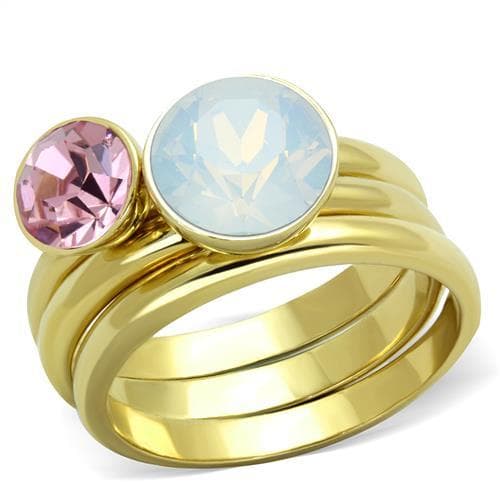
Our pick: Stainless Steel Gold Pink Opal Crystal Stackable Set Ring — $27.99. The most "October" ring we have: a stack of gold-tone bands carrying one pink crystal and one milky, opal-look crystal, so you get both October colors in one. Gold IP stainless steel; the stones are crystal, not opal or tourmaline.
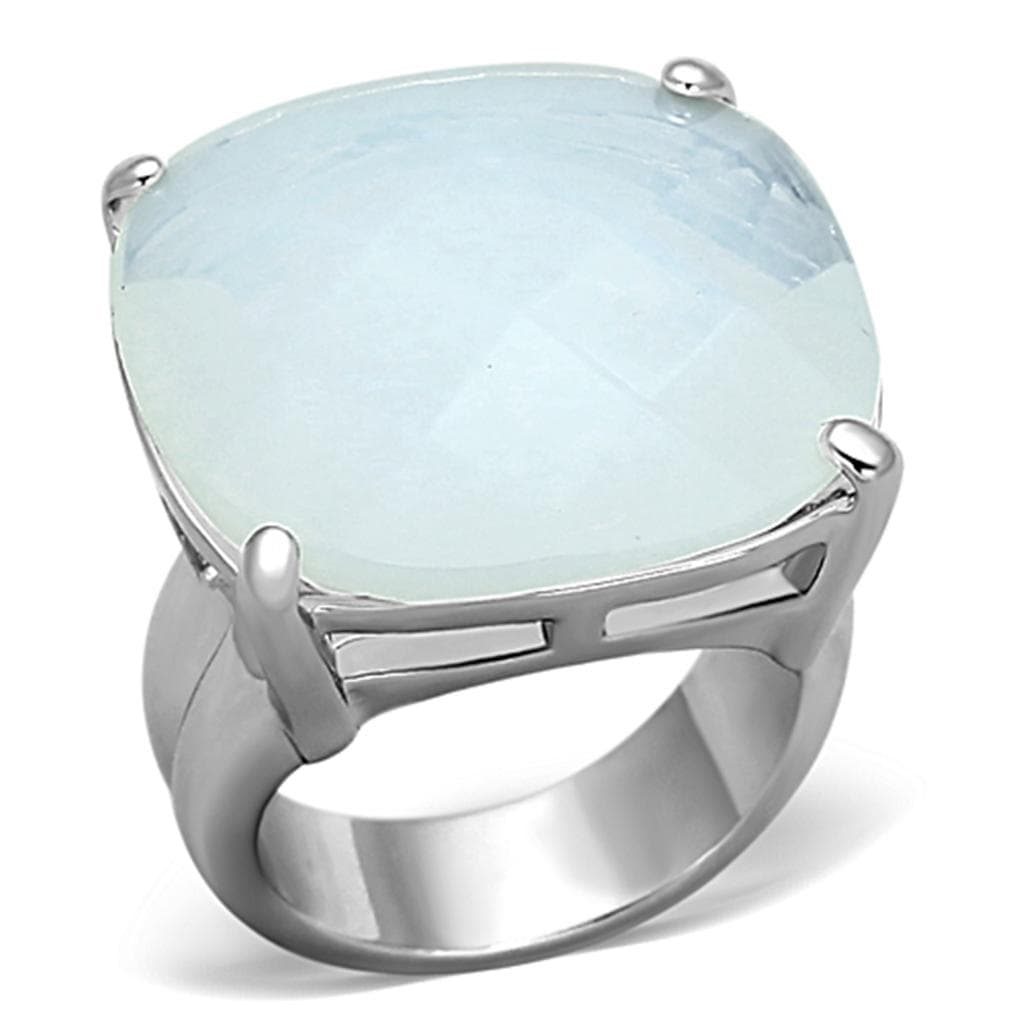
Our pick: Brass Silver Opalite Cushion Cut Solitaire Cocktail Ring — $22.99. A big faceted cushion stone that glows pale blue-white. To be very clear: opalite is man-made glass, not opal. It has a lovely glow but none of real opal's rainbow flashes. Silver-tone plated brass, so keep it dry.
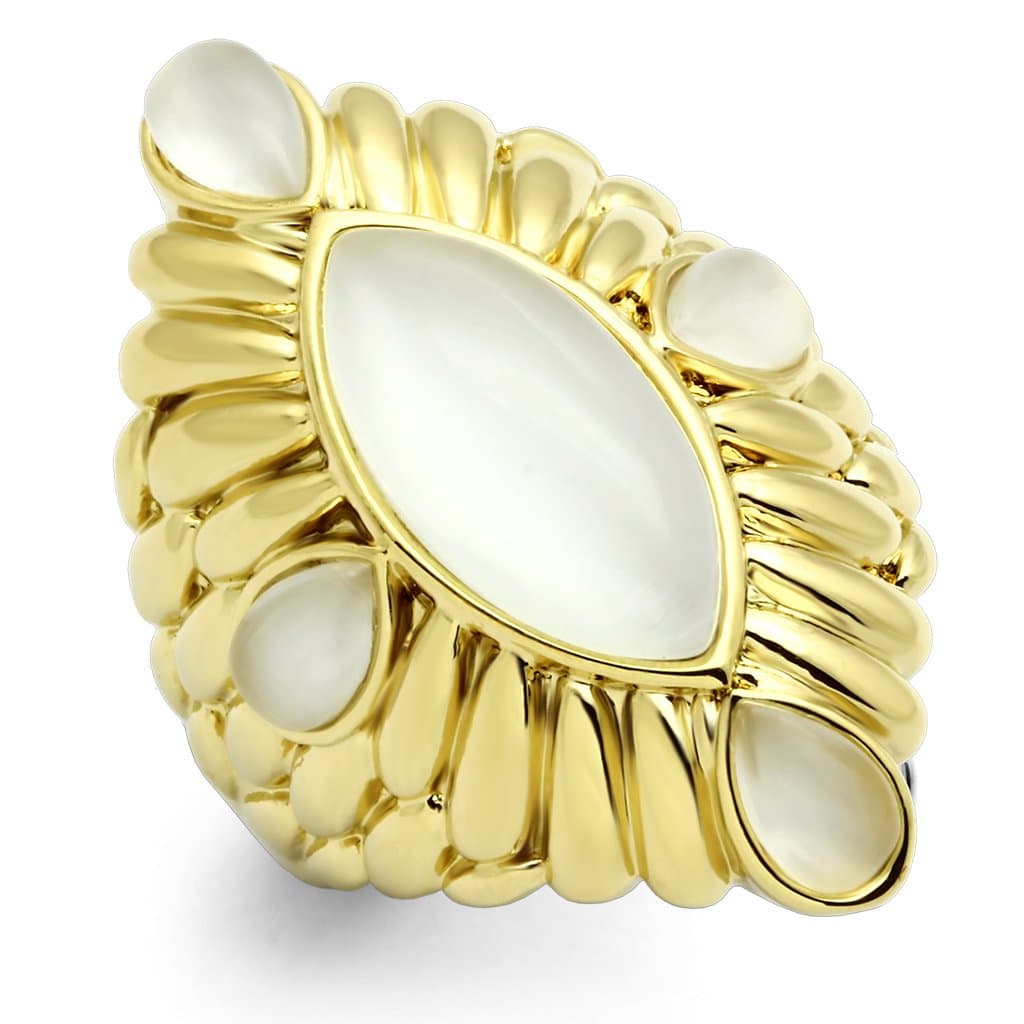
Our pick: Brass Gold Cat Eye Opal Marquise Sunburst Petal Cocktail Ring — $18.99. A milky marquise cabochon framed by gold-tone petals — vintage, a little dramatic. Simulated stones, gold-tone plated brass. Honest catch: it currently comes only in sizes 5–7.
October birthstone rings: pink tourmaline-look
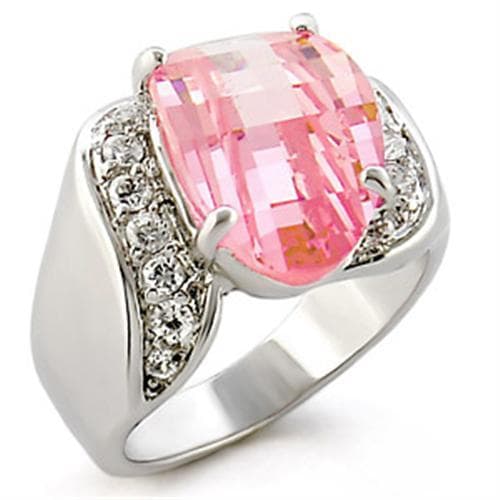
Our pick: Sterling Silver Pink Tourmaline Square Ring — $39.99. A large rectangular pink stone with a checkerboard-style cut and clear pavé along the sides. "Pink tourmaline" is the color: the stones are pink and clear CZ. Sterling silver, bright and white.
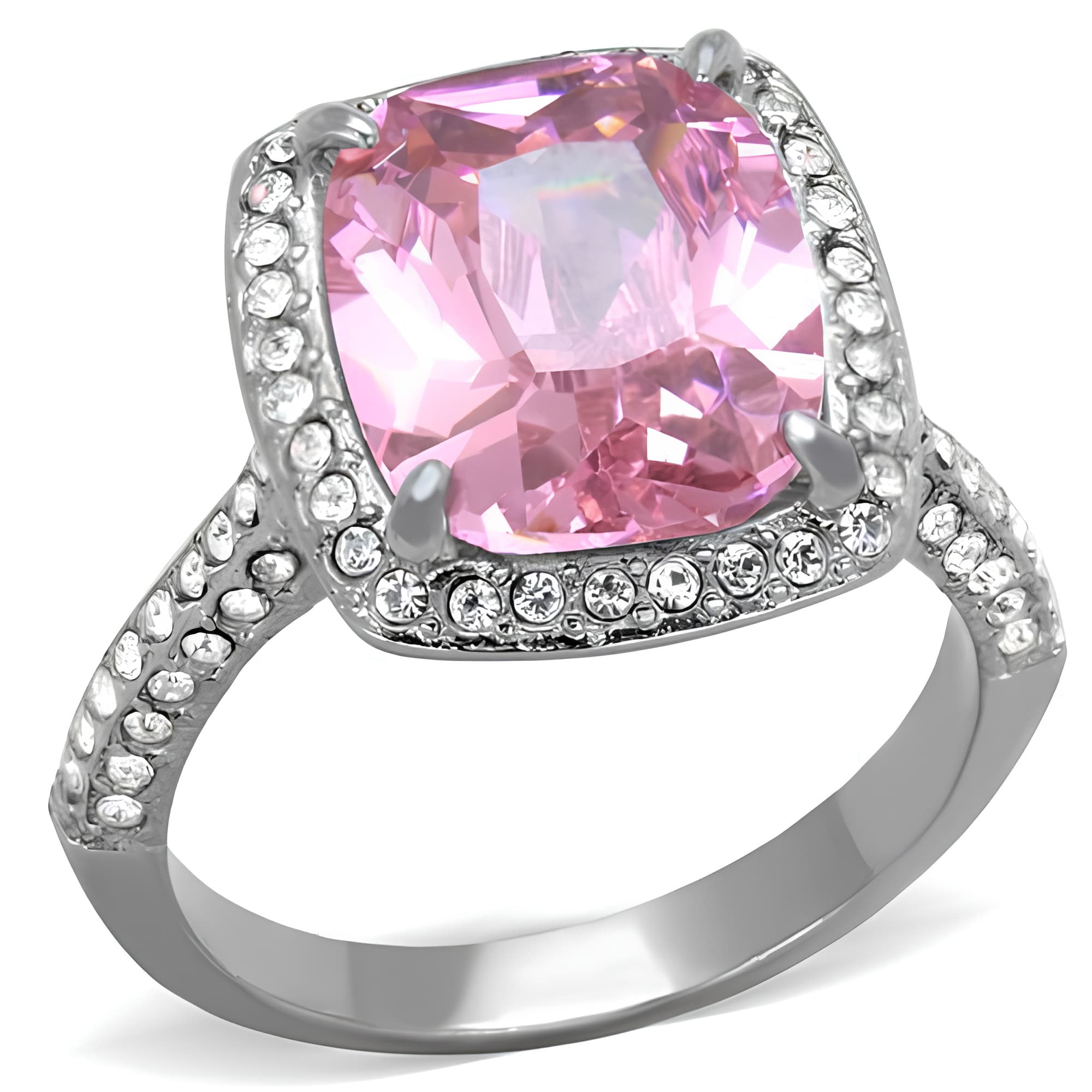
Our pick: Stainless Steel Pink Cushion CZ Double Halo Pave Ring — $32.99. Cushion-cut pink CZ inside two rows of clear pavé, on a pavé band — the most sparkle per dollar in this list. Stainless steel, silver-tone.
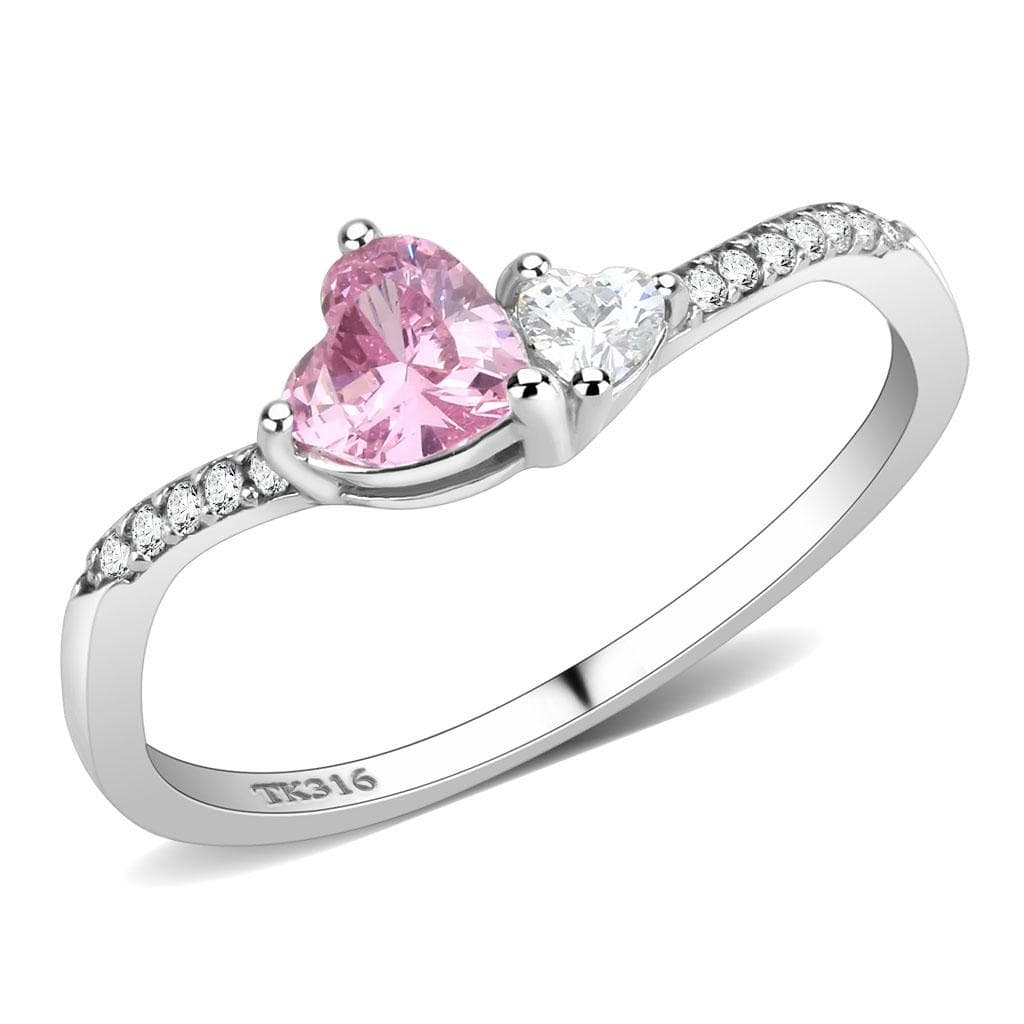
Our pick: Stainless Steel Pink CZ Heart Round CZ Pave Accent Solitaire Ring — $22.49. A pink heart and a clear round stone side by side on a slim pavé band — a sweet, dainty gift ring. Both stones are CZ; stainless steel.
October birthstone earrings
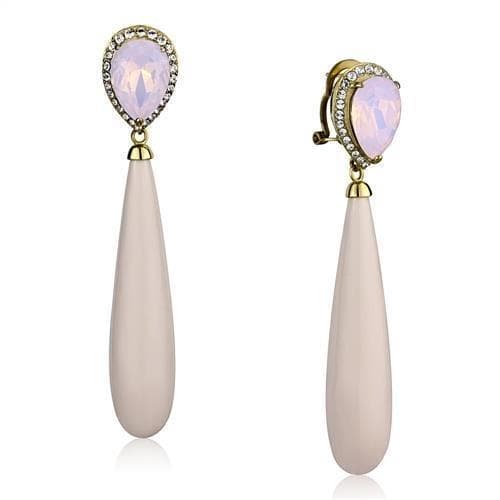
Our pick: Stainless Steel Gold IP Opal Pear Teardrop Pearl Drop Earrings — $37.99. A pale pink, opal-look pear stone in a small crystal halo, with a long blush-toned faux-pearl drop underneath. Both October colors again, in dressier form. Gold IP stainless steel; the stones are simulated.
Honest gap: we don't have a true opal-look pendant in stock right now that passes our checks, so for a milky-white necklace, the earrings above are the closest match.
How to care for October birthstone jewelry (real or simulated)
- Stainless steel (most picks above): doesn't tarnish, won't turn skin green, fine with water and sweat, hypoallergenic for most people. Can't be resized — use our ring size chart first.
- Gold IP steel: a durable finish, but still a finish. Avoid abrasive cloths.
- Sterling silver: brighter and whiter, but it can tarnish. Wipe with a soft cloth and store in a bag.
- Plated brass: the most delicate finish here. Take it off before showers, swimming and hand sanitizer.
- All stones: warm water, a drop of dish soap, a soft brush. Skip harsh chemicals. If you own real opal, never soak it and keep it away from heat and ultrasonic cleaners.
Every order ships free within the US, and you have 30 days from delivery to return unworn pieces with tags and packaging.
FAQ
What is the October birthstone? October has two birthstones: opal and tourmaline. Opal is the traditional stone; pink tourmaline was added as an alternate in 1952, and tourmaline in any color is widely accepted today.
What color is the October birthstone? Opal is usually milky white with rainbow flashes, and tourmaline's October shade is pink. Together, iridescent white and pink are the October birthstone colors.
What does the October birthstone mean? By tradition, opal is associated with hope, purity and truth, and pink tourmaline with love and gentleness. These are folklore meanings, not properties of the stones.
Is opal too soft for an everyday ring? Opal rates 5 to 6.5 on the Mohs scale and can crack with heat or sudden temperature changes, so real opal needs care in a ring. Tourmaline (7 to 7.5) is the tougher October choice.
Is opalite the same as opal? No. Opalite is a man-made glass with a milky, bluish glow. Real opal is a natural silica mineral that shows play-of-color.
Are your October birthstone pieces real opal or tourmaline? No. They use CZ, crystal, glass or simulated cabochons in October colors; words like "opal" and "pink tourmaline" in the names describe the color or look.
More birthstone guides
This guide is part of our birthstone series. Start with the complete birthstone chart for all 12 months, or jump to another month:
- June birthstone: pearl, moonstone and alexandrite
- August birthstone: peridot, spinel and sardonyx
- December birthstone: turquoise, zircon and tanzanite
Sources: GIA — October Birthstones; American Gem Society — October Birthstones.
Want to browse more colors and styles? Shop all October birthstone jewelry, or see our cocktail rings, stackable rings, drop and dangle earrings or pendant necklaces.
Gem facts come from published gemological sources; birthstone meanings are shared as folklore and tradition only. All stones in our jewelry are cubic zirconia, crystal, glass or simulated stones — not natural opal, tourmaline, moonstone or ruby. Prices checked September 29, 2026 and may change.